Soil Conditions
Houston Black Clay / Caliche (Transitional Zone)
Common Foundation Type
Concrete Slab (Primarily)
Top Foundation Issue Here
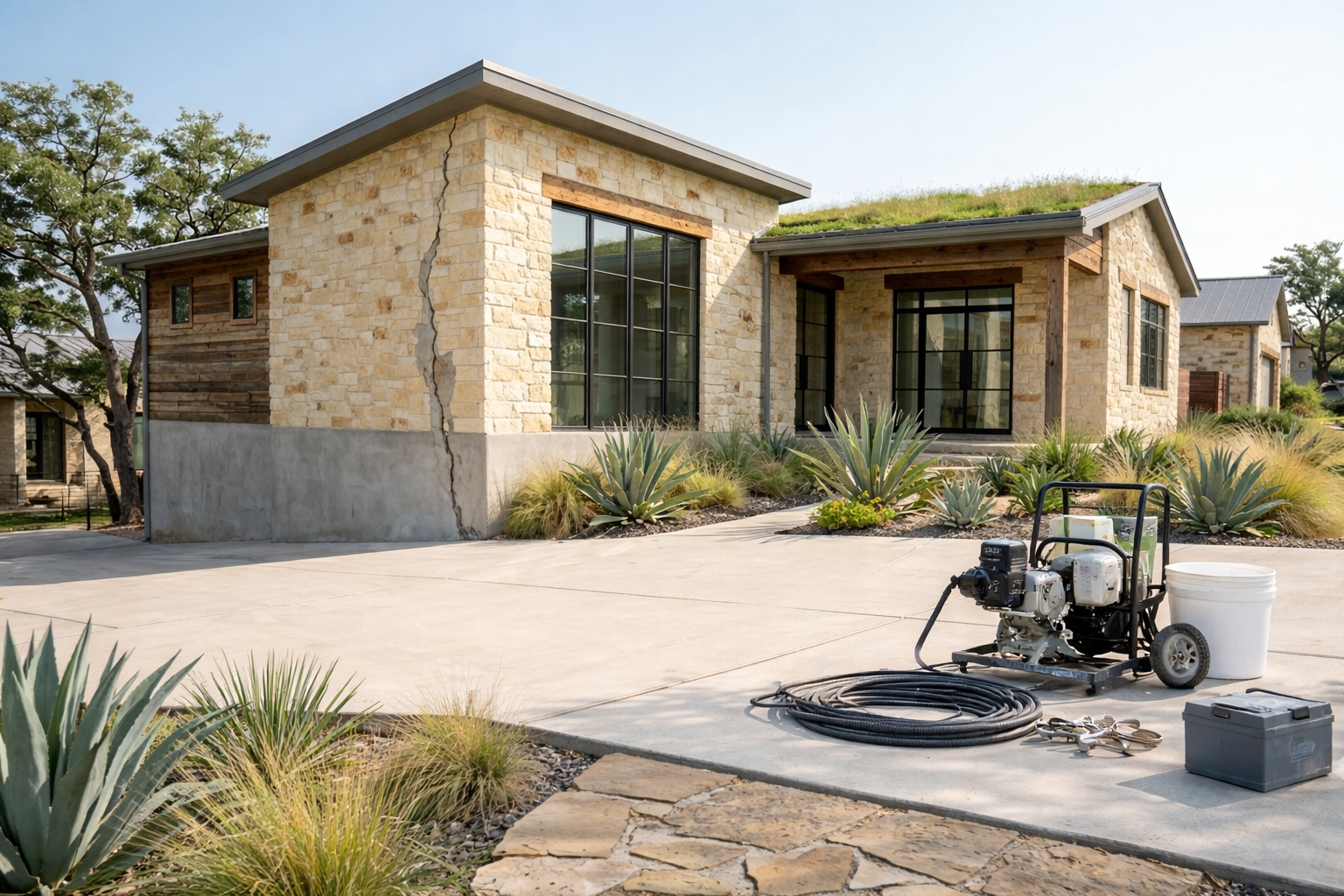
Clay-to-caliche soil variability in Stone Oak causes differential slab settlement, resulting in stair-step cracks in brick, sticking doors, and uneven floors — especially on hillside lots.
Foundation Repair in Stone Oak, TX: What Every Homeowner Needs to Know
Stone Oak is one of San Antonio's most desirable master-planned communities, known for its hillside homes, top-rated schools, and upscale amenities. But beneath the manicured lawns and limestone facades lies a foundation challenge unique to this part of Bexar County.
Stone Oak sits on a transitional soil zone — Houston Black Clay blending with shallow caliche limestone. This creates an unpredictable environment for foundations, where sections of the same home may experience vastly different movement patterns.
Common Foundation Problems in Stone Oak
- Differential settlement (one side sinks faster than the other)
- Stair-step cracks in brick veneer
- Doors and windows that bind or won't close
- Cracks in drywall near corners and doorframes
- Gaps at roofline or where walls meet ceilings
- Sloping or bouncy floors
Why Stone Oak Foundations Are Complex
The hillside topography of Stone Oak adds drainage challenges on top of the soil variability. Rainwater runoff can saturate clay zones while caliche areas stay bone-dry, causing opposite reactions in adjacent foundation sections. Homes built on slopes are especially prone to lateral soil movement.
Our Foundation Repair Process
1. Free inspection and assessment
2. Soil profile and drainage analysis
3. Customized pier and beam or slab repair plan
4. Pier installation with lifetime warranty options
5. Drainage correction to prevent recurrence
Stone Oak homeowners trust us because we understand the local geology. Call today for a free foundation evaluation.