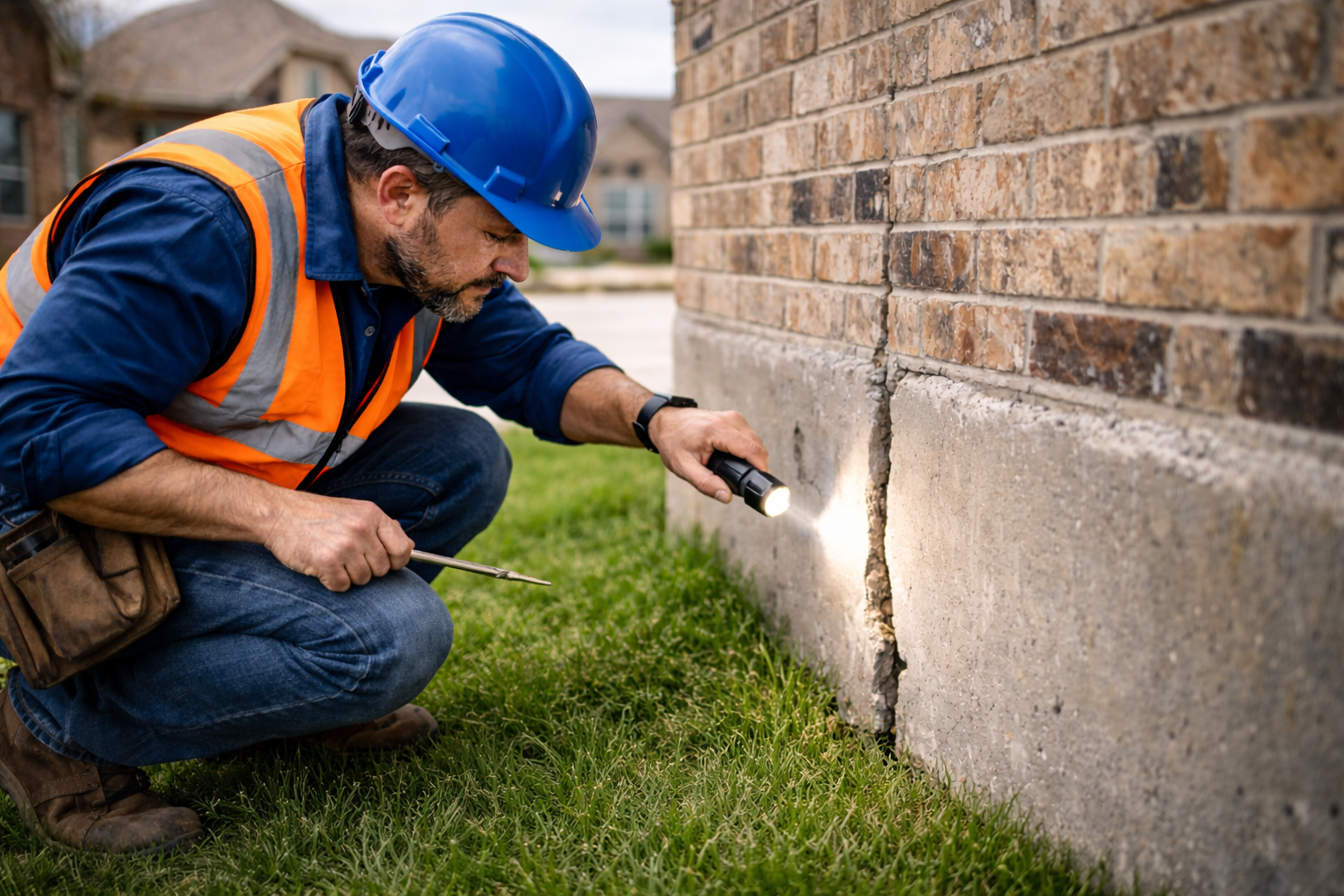
Soil Conditions
Houston Black Clay (PI 55+)
Common Foundation Type
Post-Tension Slab
Top Foundation Issue Here
Drywall cracks above door frames; severe tile tenting
Expert Cibolo / Schertz Foundation Repair: Solving Houston Black Clay (PI 55+) Challenges
The Blackland Prairie Challenge in Cibolo and Schertz
The rapid development in the Cibolo and Schertz area has offered families incredibly spacious, modern housing with great schools and beautiful suburban layouts. The homes here are largely newer and built solidly. However, as more the area developed, a tough geographical reality presented itself: the soil beneath these vast new communities. You are living directly on top of Houston Black Clay with a Plasticity Index of over 55. For those outside the engineering world, this means you are dealing with one of the most volatile, expanding soils on the map.
Often referred to as the "Blackland Prairie" soil, this dense clay throws a brutal one-two punch of severe expansive cycles. During the rainy season, the clay absorbs water furiously, expanding and puffing up. The upward heave generated by this moisture applies unimaginable pressure against the bottom of your concrete slab. Conversely, during those blazing dry Texas summers with no rain, the clay loses all its water, shrinking and aggressively cracking apart as it pulls away from your house. Over several years, your house is essentially sent on a slow-motion rollercoaster ride.
How Post-Tension Slabs React to the Rollercoaster
In virtually all the newer subdivisions in Cibolo and Schertz, homebuilders utilized Post-Tension Slabs. If you aren't familiar, a post-tension slab is basically a giant, continuous sheet of concrete laced internally with highly tightened steel cables. These slabs are engineering marvels designed to be extremely rigid and resistant to cracking. They act sort of like a floating raft sitting on top of the soil.
But here is where the Houston Black Clay creates a serious problem. Because a Post-Tension slab is designed to float as one single unit, when the soil under the perimeter of the house shrinks and falls away due to the summer drought, the heavy outer walls of your house no longer have any dirt supporting them. The incredibly strong cables keep the concrete slab from simply snapping in half, but the entire house actually starts to bend and tilt as the edges sag downward. Pushing a rigid concrete box out of level creates a chain reaction of damage throughout the home.
The Physical Signs of Slab Stress
When your slab is twisting out of level, the framing of your house is forced to twist right along with it. The symptoms become incredibly visible and undeniably frustrating.
In Cibolo and Schertz, one of the primary symptoms homeowners report is the sudden appearance of drywall cracks above door frames. A doorframe essentially creates a geometric weak point in your wall. When the massive Post-Tension slab flexes downward on the perimeter, the wooden wall studs twist, causing the stiff drywall to tear right at the top corners of your doors.
Additionally, because the concrete floor is bending under the stress of expansive soil, you will inevitably experience severe tile tenting. Large ceramic or porcelain floor tiles are glued rigidly to the concrete. As that concrete bows upward or sags downward, the distance between the tiles physically changes. Since tile cannot stretch or bend, the pressure forces the tiles to snap loudly in half or literally erupt upward off the floor, forming a "tent" shape. If you hear a loud pop and see tiles popping out of your kitchen floor, your foundation is under massive distress from the clay below.
An Engineered Lockdown Strategy
If you hire a general contractor to patch the drywall or replace the tiles, you are only treating the aesthetic symptoms. You must stabilize the heavy Post-Tension slab against the brutal Blackland Prairie clay, and you have to do it carefully.
Our engineers use precision protocols designed to avoid damaging those internal high-tension cables. We deploy heavy-duty structural steel piers deeply around the perimeter of your home. Using commercial hydraulic rigs, we push these galvanized steel columns right through the violently expanding top layers of Houston Black Clay until we hit immovable, inactive bedrock far beneath the surface. Once we reach a depth where the weather cannot affect the soil, we lock the perimeter of your house onto the steel piers. This transfers the entire weight of the exterior walls onto columns that will never move, rendering the seasonal shrink-swell cycle powerless against your home.
Local Expertise for Modern Homes
The family-oriented, fast-growing vibe of Cibolo and Schertz means homeowners should be enjoying their properties, not stressing over cracks that grow wider every summer. Because we work intimately with newer construction in this specific corridor, we know precisely how these slabs were built and the best, cleanest way to repair them. Our crews work diligently to minimize disruption to your yard and get your home permanently leveled and locked down.
Don't Let the Prairie Win
Your post-tension slab is tough, but ignoring severe seasonal settling will inevitably lead to massive structural damage throughout the house.
Stop the rollercoaster. Claim your Free Cibolo / Schertz Soil & Foundation Assessment. Let our local structural engineers lock your home onto solid ground permanently.